
search
How to turn a trail design into a built trail on Alberta public land, and then manage, maintain and limit liability for it over its full lifespan.
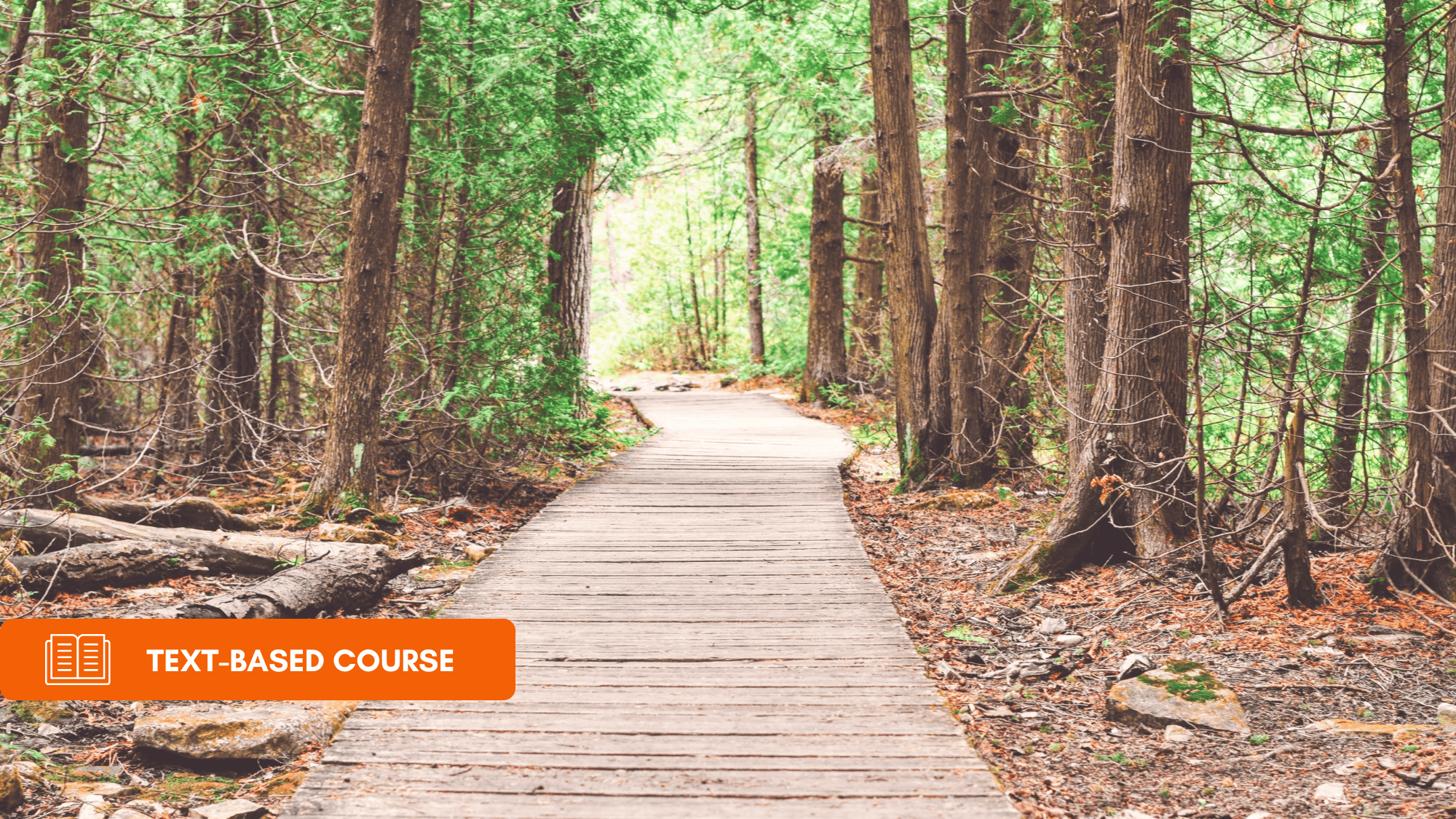
An excellent trail plan can still fail on the ground if the construction package is thin, the builders are poorly matched to the work, or environmental controls are left to chance. This course follows a trail project from design hand-off to close-out. It explains pre-construction documentation, including the scope of work, the Trail Management Objective (TMO), contract preparation, contractor work plans, specifications and the Construction Management Plan (CMP). It compares professional contractors, agency crews and supervised volunteers, and walks through the construction sequence from mobilization, clearing and subgrade preparation to fill placement, compaction, finishing and de-mobilization, along with equipment selection.
The course then turns to project management and what happens after the trail opens. It covers project manager responsibilities, construction review and deficiency tracking, as-built records and close-out, and construction best practices for water bodies, fish and wildlife, vegetation, soils, historical resources and public safety. Trail management is framed around the 4 E's of visitor management: education, engineering, enforcement and evaluation, including limits of acceptable change and monitoring. The final part covers maintenance objectives and the elements of a trail maintenance plan, and a structured risk management process that addresses occupier liability, inspection protocols, record keeping and ways to avoid, transfer, reduce and manage risk.
What Will Be Covered:
Pre-construction documentation: scope of work, contract preparation, work plans and specifications
Construction Management Plans and environmental mitigation measures
Choosing between contractors, agency crews and supervised volunteer crews
The step-by-step trail construction process and construction equipment selection
Project management duties, construction review, deficiency lists, as-built records and project close-out
Construction best practices near water bodies and for wildlife, vegetation, soils, historical resources and public safety
Visitor management through education, engineering, enforcement and evaluation, with monitoring and limits of acceptable change
Trail maintenance objectives, condition assessments and prioritization within a trail maintenance plan
Risk assessment, occupier liability, inspection protocols and approaches to avoiding, transferring and reducing risk

Leading Global Provider of Cutting-Edge Engineering CPD Courses
The Global Engineering Excellence Institute (GEEI) is a leading provider of Continuing Professional Development (CPD) courses designed to meet the evolving needs of engineers worldwide. Established in 2010, GEEI has a proven track record of delivering high-quality, industry-relevant training that empowers engineering professionals to stay at the forefront of technological advancements and best practices. Our comprehensive course offerings cover a wide range of disciplines, including civil, mechanical, electrical, and software engineering, ensuring that our learners receive the most up-to-date and practical knowledge. With a focus on practical application, GEEI's courses are developed by industry experts and are recognized by leading engineering bodies globally. We are committed to fostering a culture of continuous learning and professional growth, helping engineers achieve their career goals and contribute to the advancement of the engineering profession.